
A Practical Guide to Identifying Food Spoilage Signs
Key Takeaways
- Always follow the “Look, Feel, Smell” test—in that order—to avoid foodborne illness.
- The most dangerous pathogens are invisible, so proper food handling is non-negotiable.
- “Best by” dates indicate quality, not absolute safety or spoilage.
- When food safety is uncertain, the final rule is always: When in doubt, throw it out.
The Golden Rule: Your Senses Are Your First Line of Defense
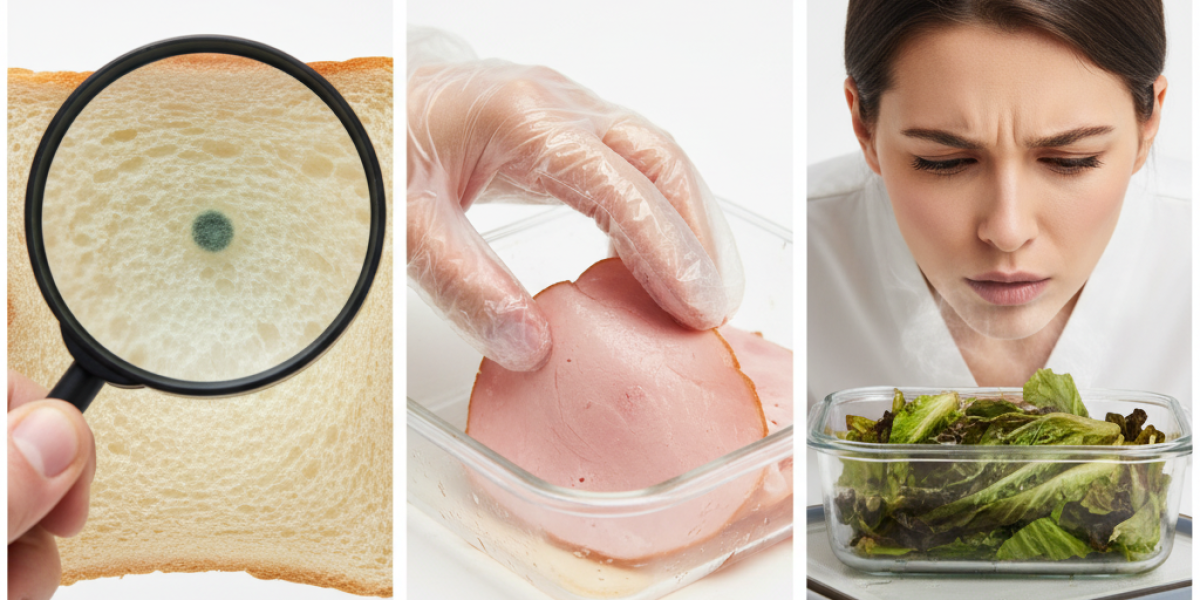
Your senses are your best defense against obvious food spoilage. The “Look, Feel, Smell” system is a clear sequence that helps you quickly assess what’s safe to eat—and what isn’t. Doing these steps in order matters: some hazards shouldn’t be handled or sniffed directly.
Start with sight: does anything look wrong? Next, gently check for suspicious textures through touch. Use utensils or gloves when possible. Only then do you carefully use your nose to detect off-odors.
Never start with a taste “test”—it’s both ineffective and dangerous. This approach prevents exposure to pathogens and boosts your confidence with every meal.
Step 1: The Visual Inspection for Visual Food Spoilage
Check for Mold Growth (on bread, cheese, fruits)
Look for Food Discoloration (in meats, leftovers)
Inspect Packaging (swollen cans, broken seals, leaking packages)
Step 2: The Feel Test for Texture Change in Bad Food
Detect a Slimy Film (on deli meats, chicken, fish)
Notice Unwanted Softness or Mushiness (in vegetables and fruits)
Feel for Unexpected Graininess or Curdling (in dairy products)
Step 3: The Smell Test for Food (With a Major Warning)
The final sense is smell—but it should always be the last step. Smell can identify spoilage, but you should never deeply inhale over a suspicious food, especially with meats or canned goods.
Sour or rancid scents indicate bacterial growth, especially in dairy or leftovers. If meat smells even faintly “off,” like ammonia or sulfur, do not risk it[5].
Moldy, musty, or chemical-like odors on any food are also red flags. If a container “puffs” with gas on opening, the safest bet is to close it and discard without sniffing.
Remember: always trust your instincts. If an odor seems odd or unusually pungent, it’s not safe.
The Invisible Danger: When Your Senses Can’t Tell Food Is Bad
The Temperature Danger Zone
The Threat of Cross-Contamination
Understanding Expiration Dates
“Use By” and “Sell By” dates confuse many people. “Use By” dates indicate when food is safest[9]. “Best By” is only about peak quality—food may still be edible for a short time after.
However, you should never trust dates alone. Always use the 3-step system for a final check.
Your Final Verdict: A Confident Guide on When to Toss Food
The “Look, Feel, Smell” test is your strongest tool to spot food spoilage signs. Your senses are excellent at flagging danger. That said, they can’t guarantee safety against invisible threats.
Safe handling, proper refrigeration, and respect for expiration dates are just as important. Above all, when faced with uncertainty, remember the golden rule: When in doubt, throw it out.
You now have a reliable process for spotting food spoilage signs. To understand the science of why food spoils and how to prevent it, explore Fresh Keeper’s The Ultimate ‘Stay Safe’ Guide to Food Spoilage Detection. It’s the perfect next step to protect your family.
Frequently Asked Questions
What are 10 signs of food spoilage?
What are the indicators of food spoilage?
What are the symptoms of spoiled food?
What are the state 5 sensory signs of food spoilage?
Is it safe to just cut the mold off hard cheese or bread?
If my milk is past the date but smells fine, can I drink it?
How long are leftovers really safe to eat?
Why do my vegetables get slimy in the fridge?
Can you get sick from food that looks and smells perfectly normal?
What is the most important factor for preventing invisible food spoilage?
References
- USDA Food Safety and Inspection Service. “Mold on Food: Are You Eating Spores?”
- FDA. “Refrigerated Food and Power Outages: When to Save It and When to Throw It Out.”
- USDA. “Deli Meats—Handle and Store Safely.”
- FoodSafety.gov. “Dairy Products and Food Safety.”
- CDC. “Food Safety and Foodborne Illness.”
- USDA. “The Danger Zone: Keep Food Safe.”
- FDA. “Food Safety for Power Outages.”
- CDC. “Cross-contamination and Safe Handling.”
- USDA. “Food Product Dating.”
- WHO. “Foodborne Diseases.”
Ready to Keep More Food Fresh?
- Get our 1-page printable checklist
- Join the “Stay Fresh” email list
- See the full Triple-S Method series