
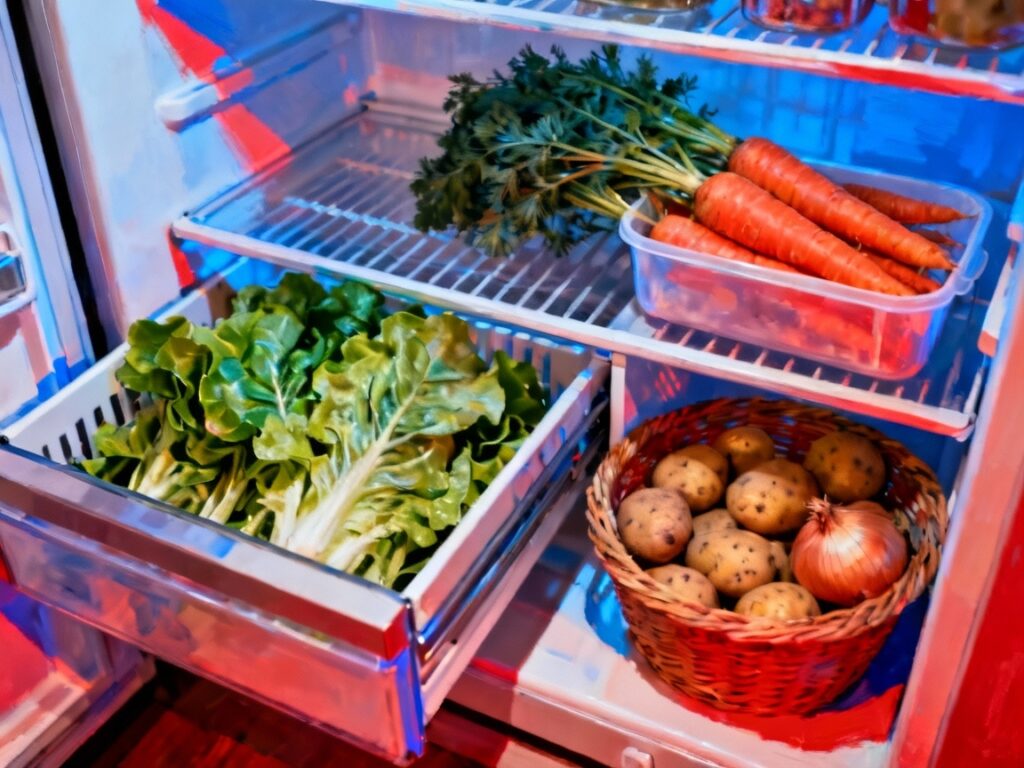
Have you ever opened the fridge and found soggy spinach or squishy cucumbers? Figuring out how to store vegetables can be tricky. Improer storage leads to waste, ruined meals, and lost money.
But don’t worry! With simple tips, you can keep vegetables fresh and crisp for much longer. This Store Fresh guide will show you what to do for fresher produce.
Table of Contents
The 3 Golden Rules of Vegetable Storage
Most vegetables go bad because of three common mistakes. Either they dry out, get exposed to too much ethylene gas, or are stored in the wrong place.
Don’t panic! These three golden rules will keep your vegetables fresh:
- Humidity Control: Some veggies need more moisture to stay crisp, while others spoil if too damp.
- Ethylene Gas Management: Keep certain vegetables away from ethylene-producing foods to avoid spoilage.
- Correct Location Matters: Fridge, pantry, or countertop—use the right spot for each vegetable.
Rule #1: Master Humidity to Banish Wilted Greens
Humidity plays a big role in keeping vegetables fresh. Too much moisture causes sliminess or mold, while too little causes wilting.
Thankfully, fridges have crisper drawers that help control humidity! Use these drawers properly to keep your veggies in the best shape.
High-Humidity Lovers (Vegetables That Wilt)
Many vegetables require high moisture to stay hydrated and retain their crisp texture. These should be stored in the high-humidity drawer, which traps moisture by limiting airflow inside.
- Examples: Carrots, leafy greens (lettuce, spinach, kale), celery, broccoli, cauliflower, and Brussels sprouts.
Tips for High Humidity:
- Wrap greens in a damp paper towel to stop them from drying out.
- Store root vegetables like carrots in a sealed plastic bag or airtight container to retain moisture.
Low-Humidity Lovers (Vegetables That Rot)
Other vegetables, like mushrooms and zucchini, rot quickly if exposed to too much dampness. These go into the low-humidity drawer, which has vents to allow airflow.
- Examples: Mushrooms, zucchini, cucumbers, peppers, and eggplant.
Tips for Low Humidity:
- Use a paper bag when storing mushrooms to allow airflow and absorb extra moisture.
- Avoid sealing vegetables like cucumbers or peppers tightly. They need room to breathe.
Rule #2: Respect Ethylene Gas to Prevent Spoilage
The Gas Producers (Keep Them Separate)
- Examples: Apples, bananas, avocados, tomatoes, melons, peaches, and pears.
Tips for Ethylene Gas Producers:
- Store ethylene-producers in a separate fridge drawer or kitchen counter.
- Use bananas to ripen avocados faster but keep them away from lettuce or carrots.
The Sensitive Ones (Protect Them)
- Examples: Carrots, spinach, broccoli, cauliflower, asparagus, and lettuce.
Tips for Sensitive Vegetables:
- Keep sensitive vegetables bagged and sealed to block out ethylene gas.
- Ensure they are stored in the fridge’s high-humidity drawer for better freshness.
The Action Plan: A "Keep Apart" Checklist
- Apples + Lettuce = Wilted lettuce in days.
- Tomatoes + Cucumbers = Squishy cucumbers that lose flavor.
- Bananas + Carrots = Carrots turn soft and lose their crunch.
Rule #3: Know the Right Location (Fridge, Counter, or Pantry)
Not all vegetables belong in the fridge. Some need room temperature, while others thrive in dark, dry spaces. Storing vegetables in the right spot ensures they last as long as possible and keep their flavor.
The Fridge Crew (Most Vegetables)
- Examples: Leafy greens, broccoli, celery, asparagus, and peas.
Tips for the Fridge:
- Store vegetables in separate bags or containers to prevent odors from mixing.
- Choose high- or low-humidity drawers based on the vegetable’s needs.
The Pantry Crew (The Root Cellar Gang)
- Examples: Potatoes, onions, garlic, winter squash, and sweet potatoes.
Tips for the Pantry:
- Keep onions and potatoes in different areas since onions produce ethylene that can sprout potatoes.
- Use mesh bags or baskets, allowing airflow and reducing mold risk.
The Countertop Crew (The Flavor Savers)
- Examples: Tomatoes, basil, avocados, and eggplants.
Tips for the Countertop:
- Store tomatoes stem-side down to reduce water loss during storage.
- Keep avocadoes at room temperature until they ripen; refrigeration slows further ripening.
Your Blueprint for a Fresher, Less Wasteful Kitchen
Frequently Asked Questions
What vegetables should not be refrigerated?
What are the best techniques for storing vegetables?
How can I store vegetables without a fridge?
Which vegetables can be stored together?
How do I keep greens from wilting?
Can I store potatoes and onions together?
Should I wash vegetables before storing?
How do I store fresh herbs properly?
How do I tell which crisper drawer is high humidity?
Can fruits and vegetables be stored in the same drawer?
References
- How to Store Fruits and Vegetables from the National Center for Home Food Preservation
- University of California Agriculture: Tips for Fresh Produce Storage
- Michigan State University Extension: Food Storage Guide
- University of Wisconsin Food Safety: Storing Fresh Produce
- USDA FoodKeeper App: Produce Storage Tips